Rational
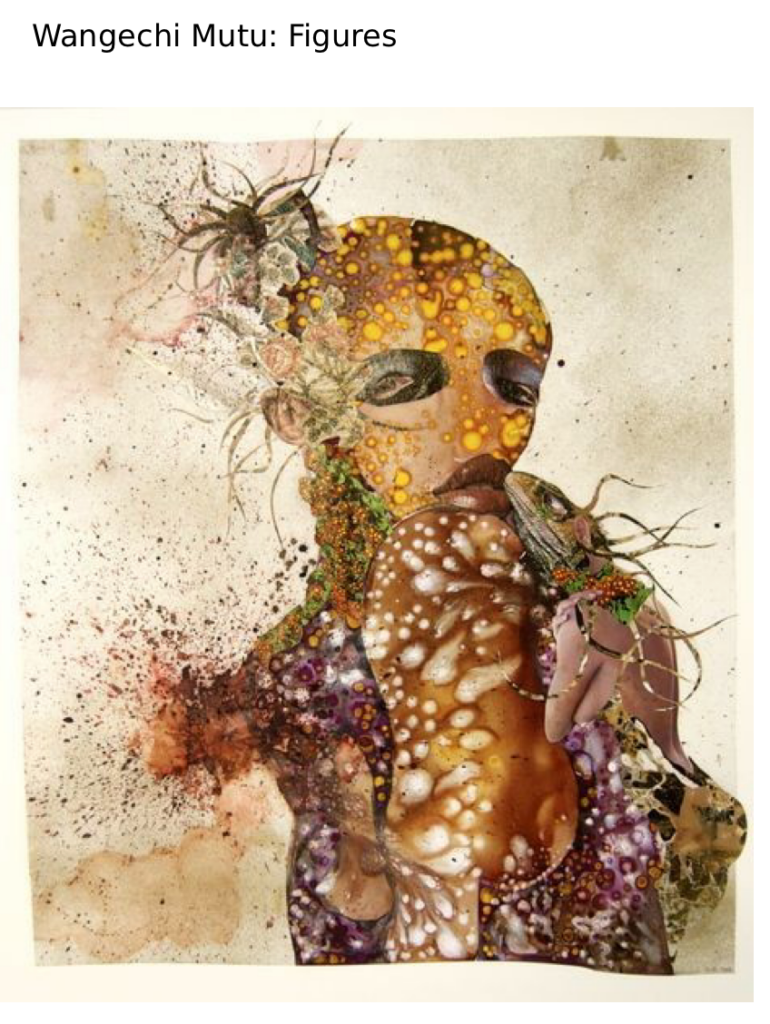
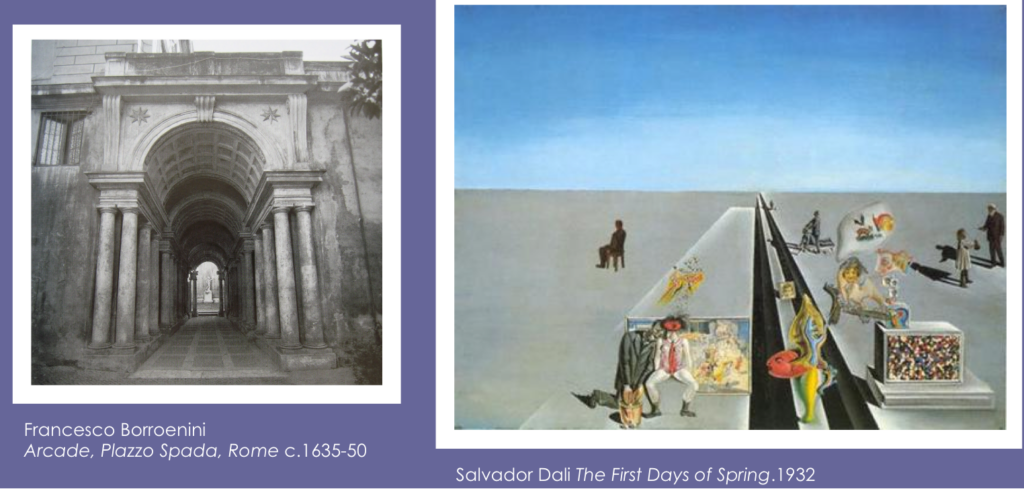
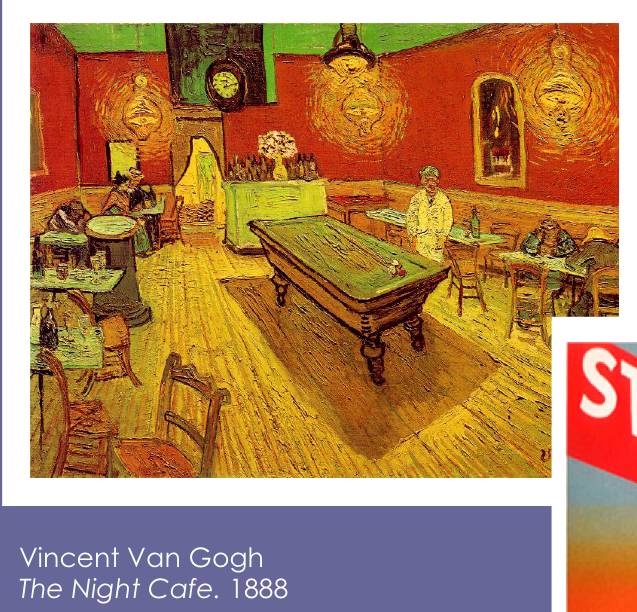
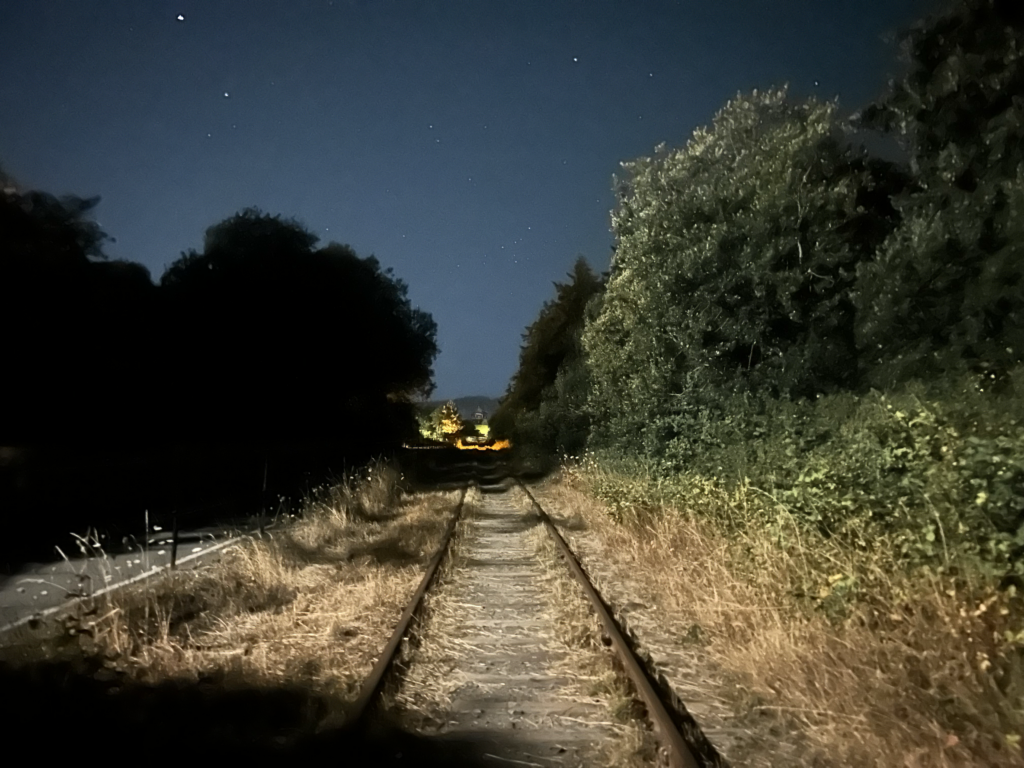
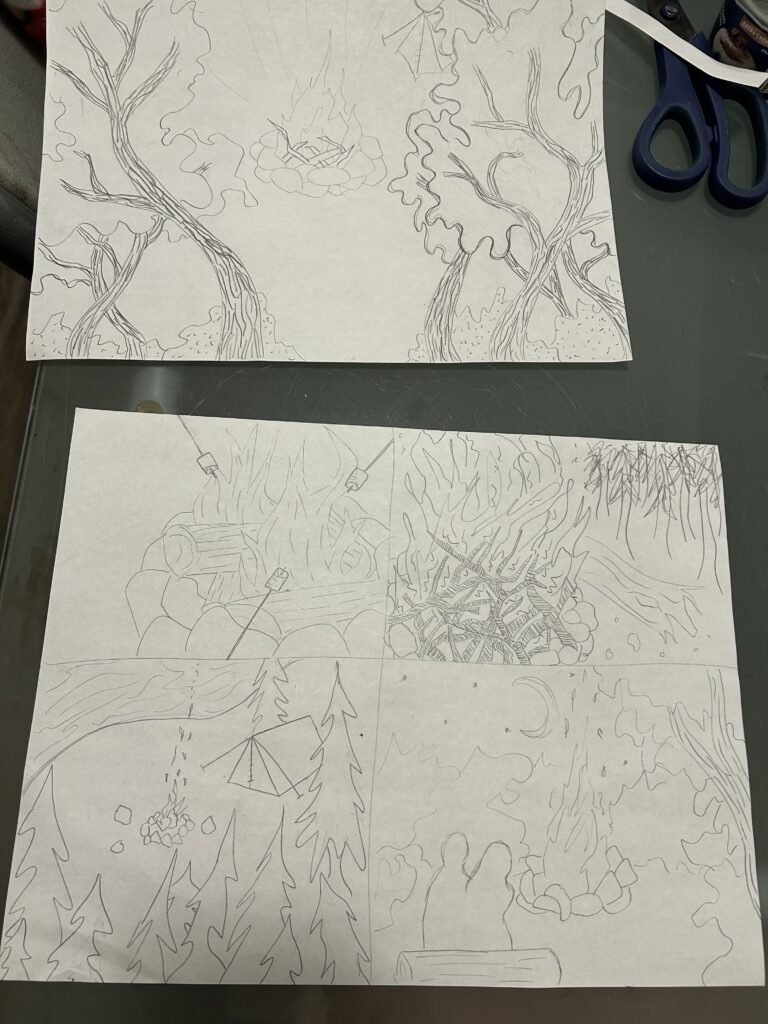
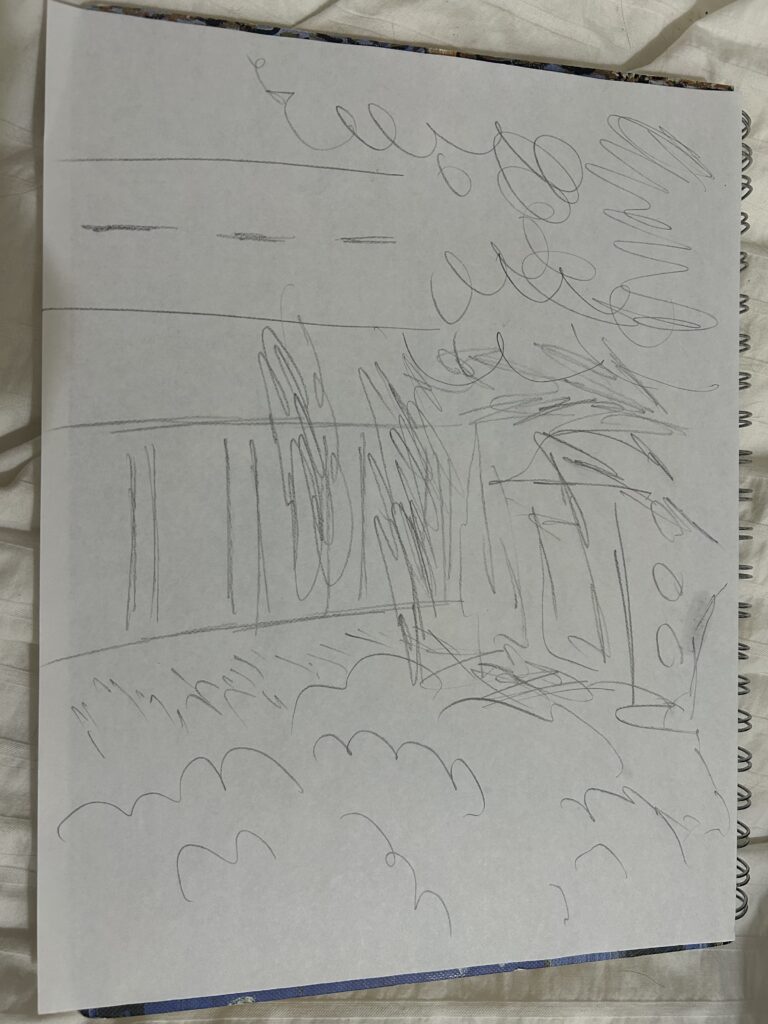
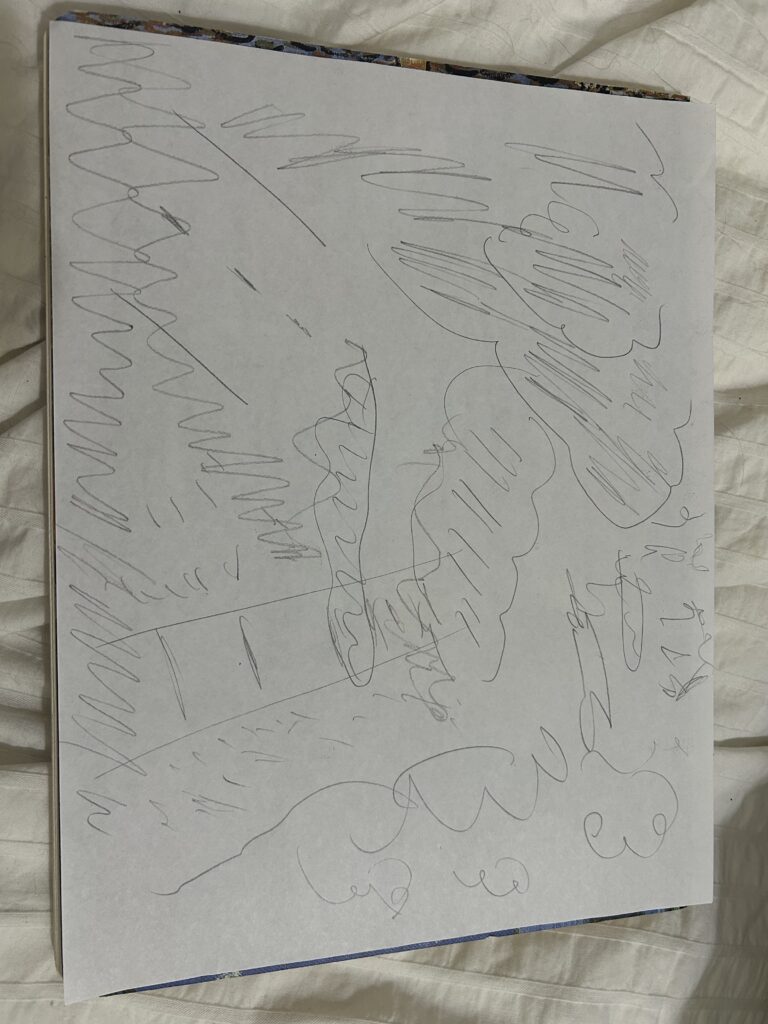
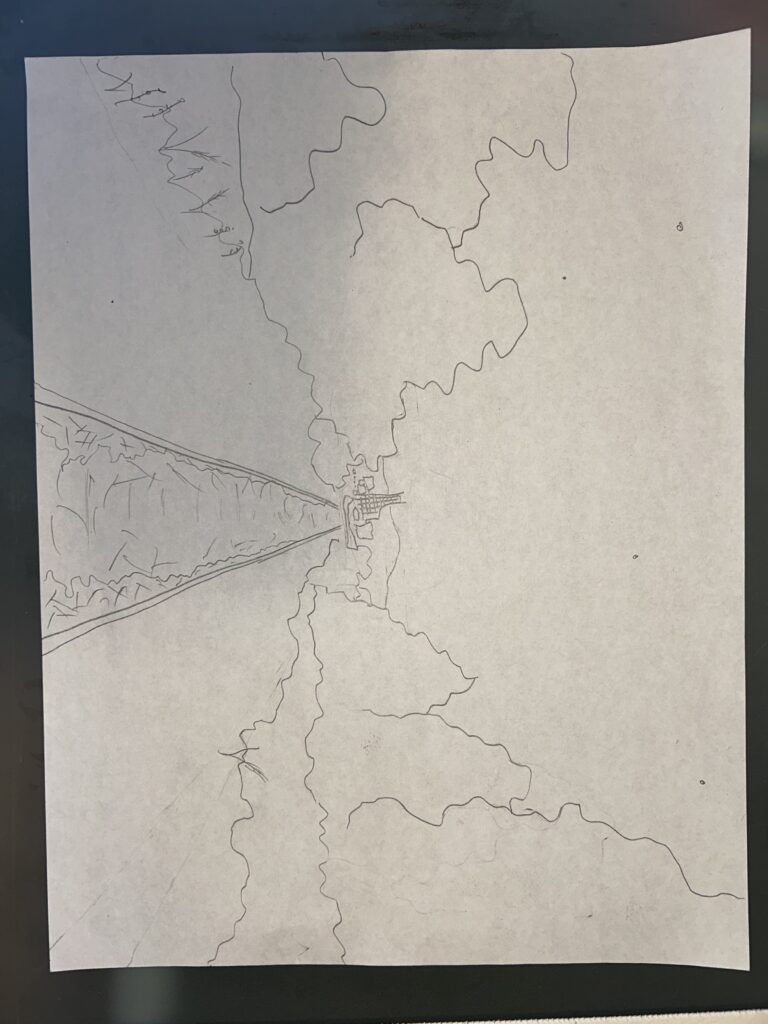
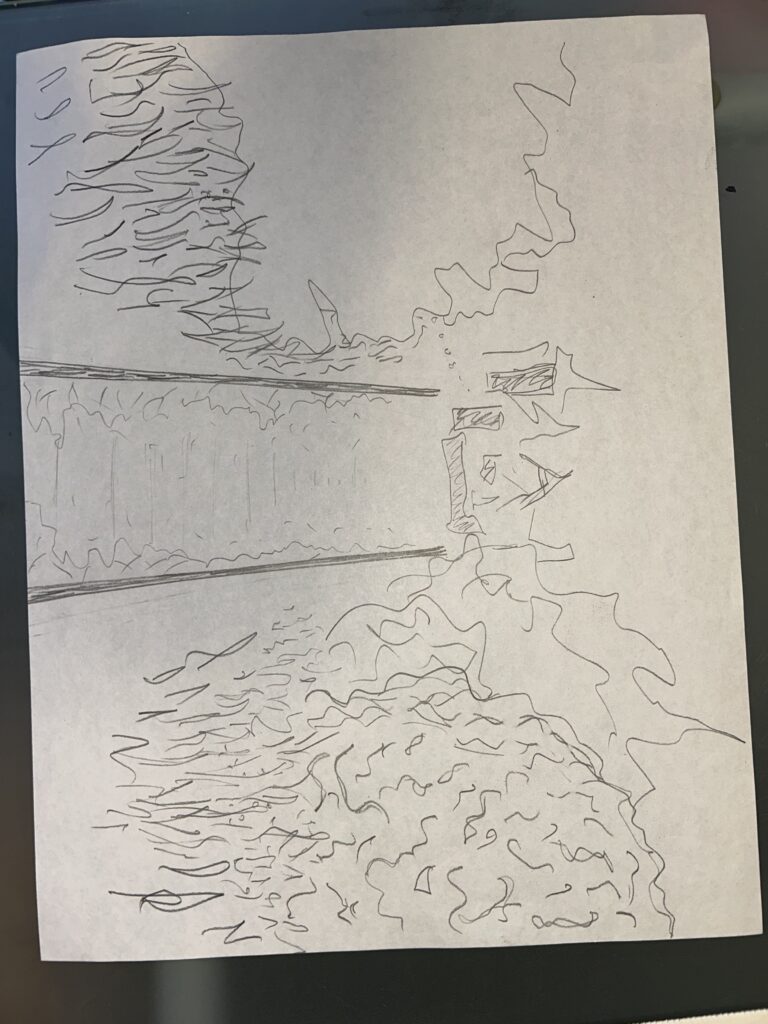
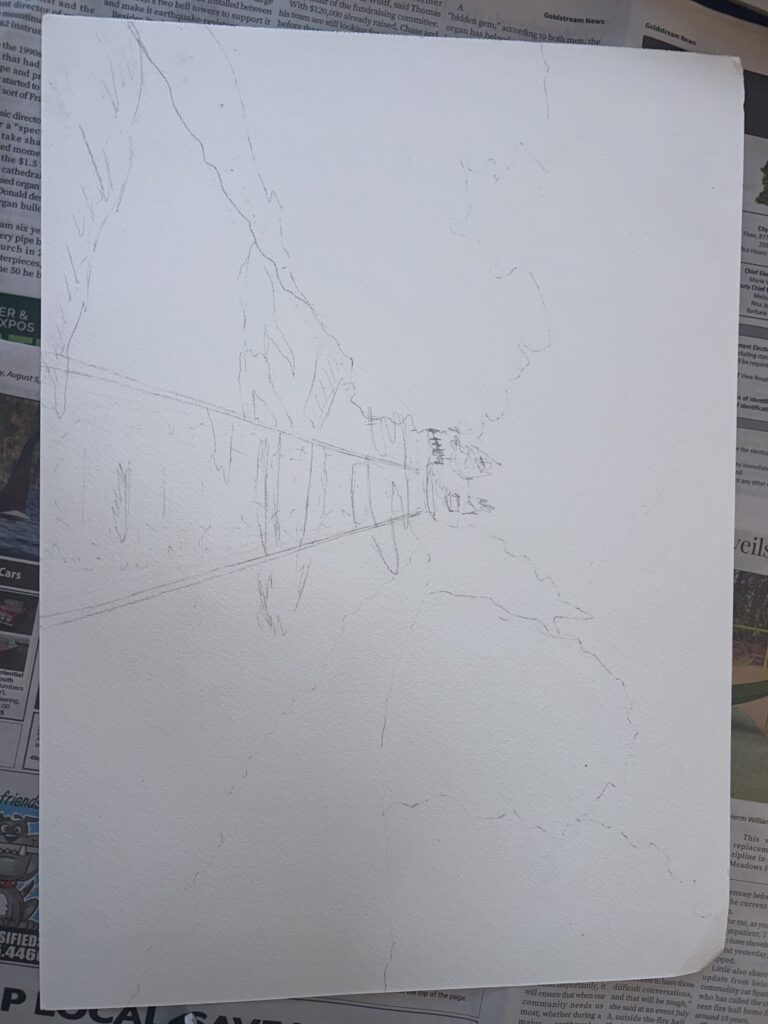
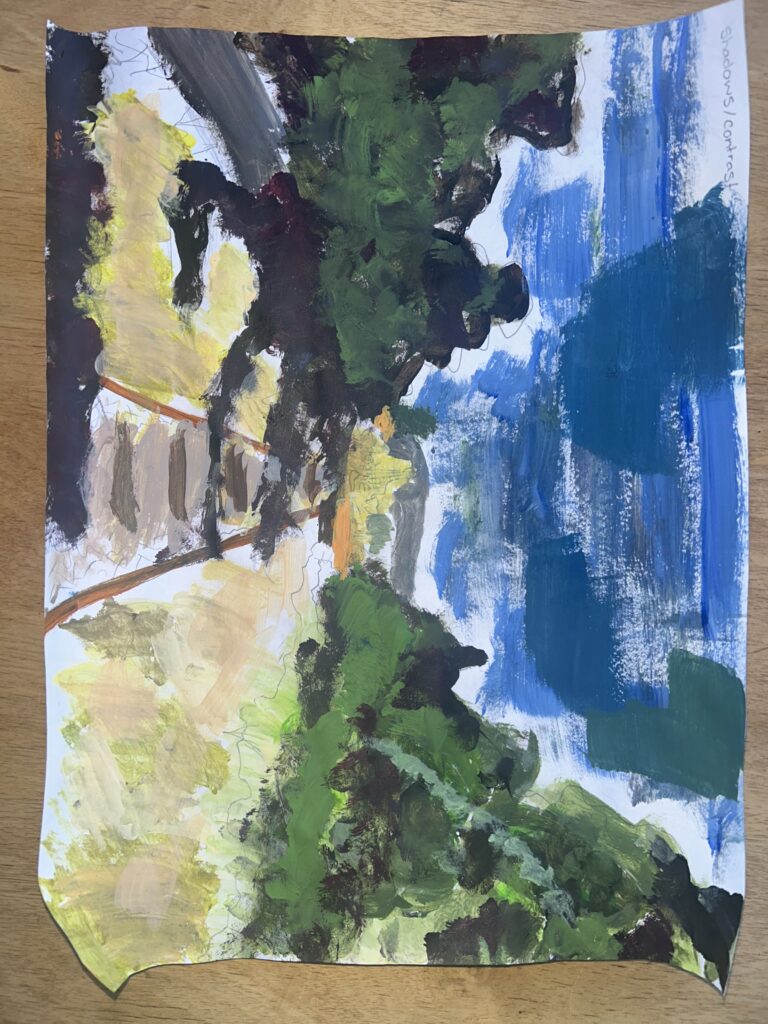
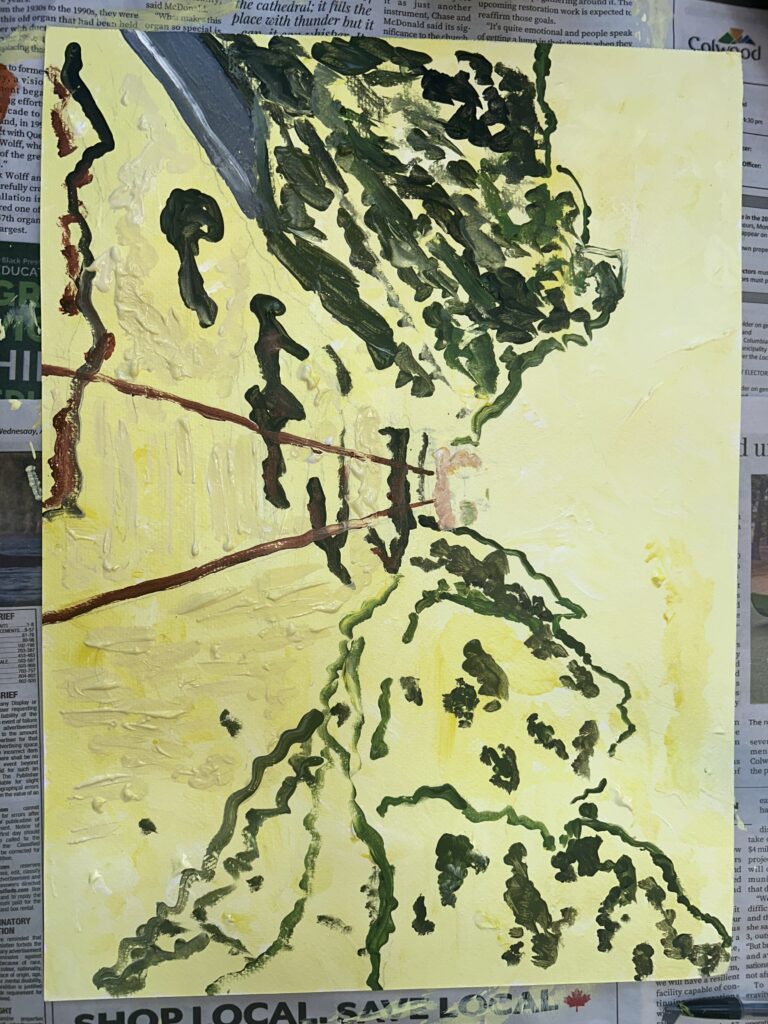
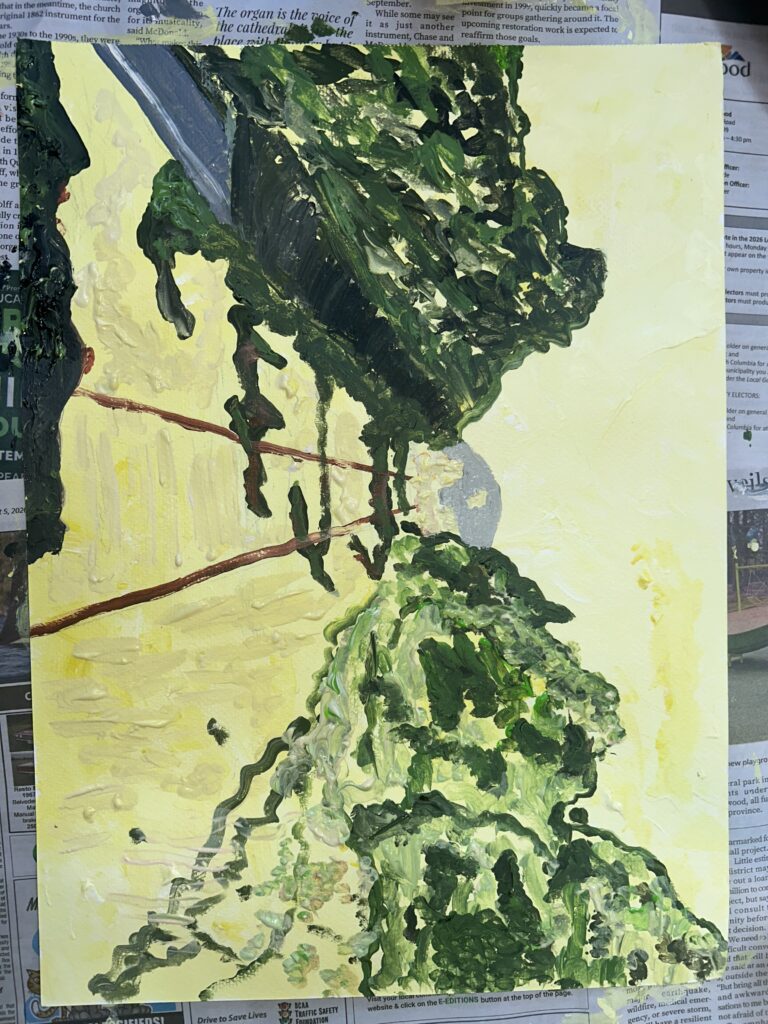
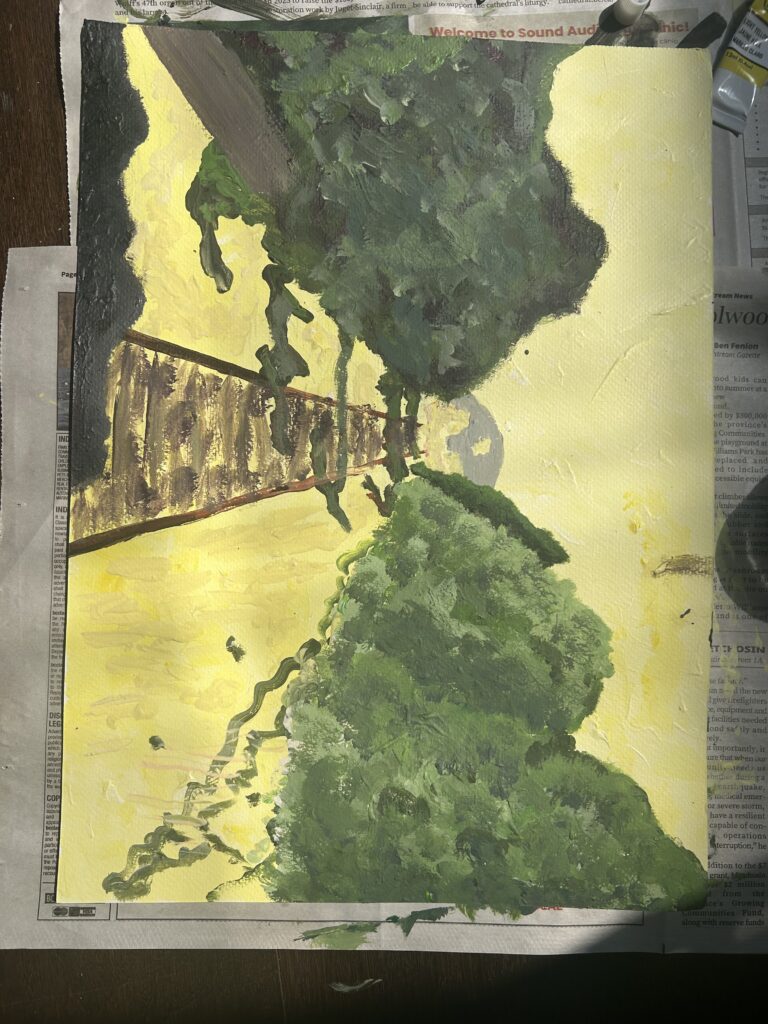
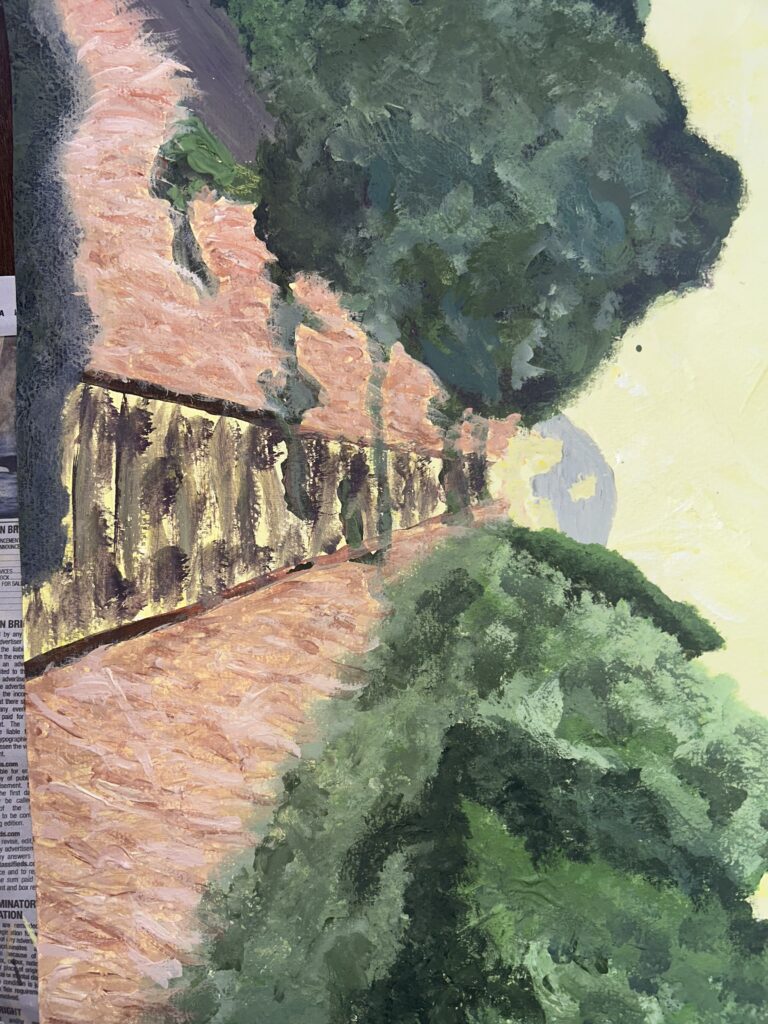
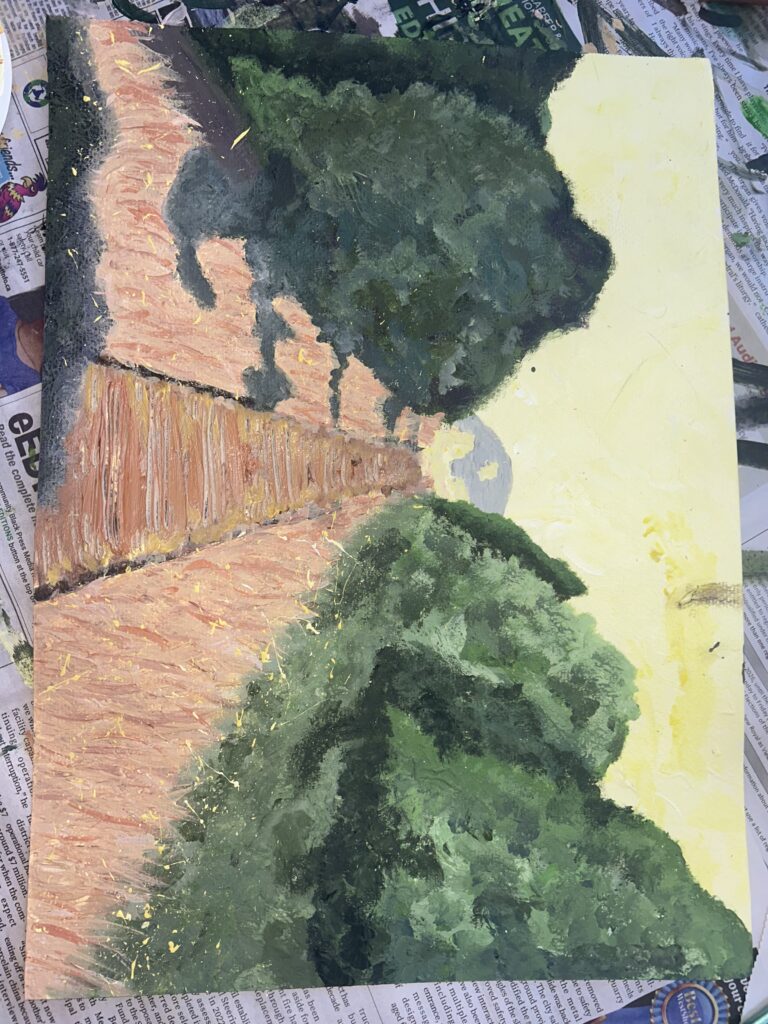
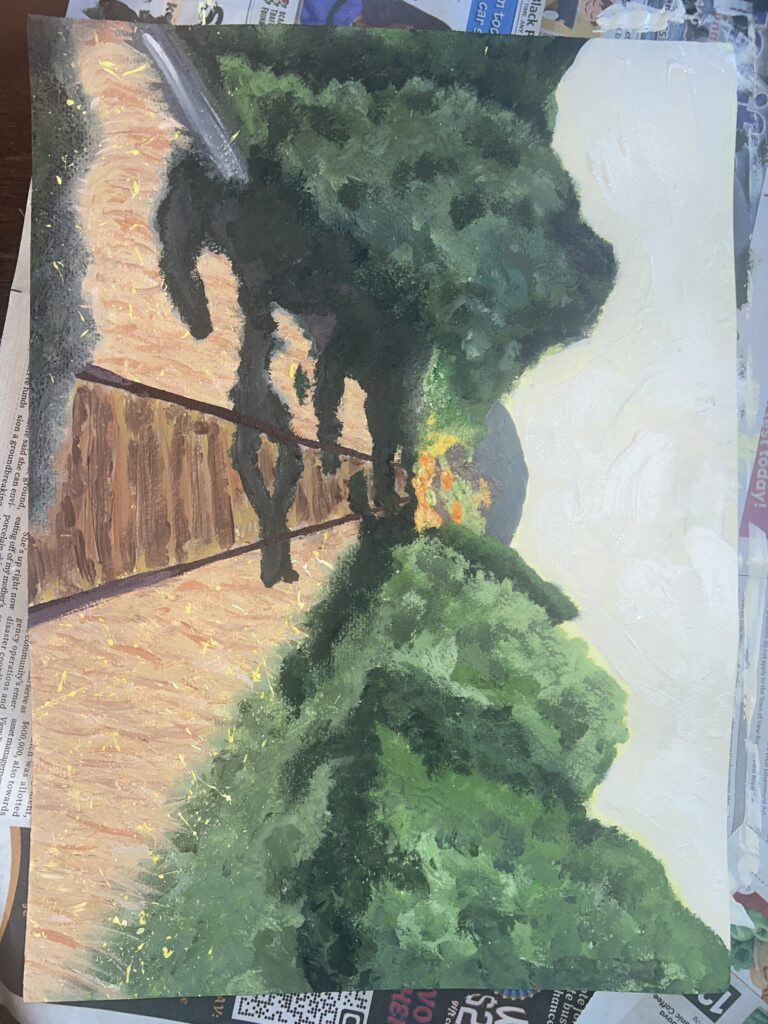
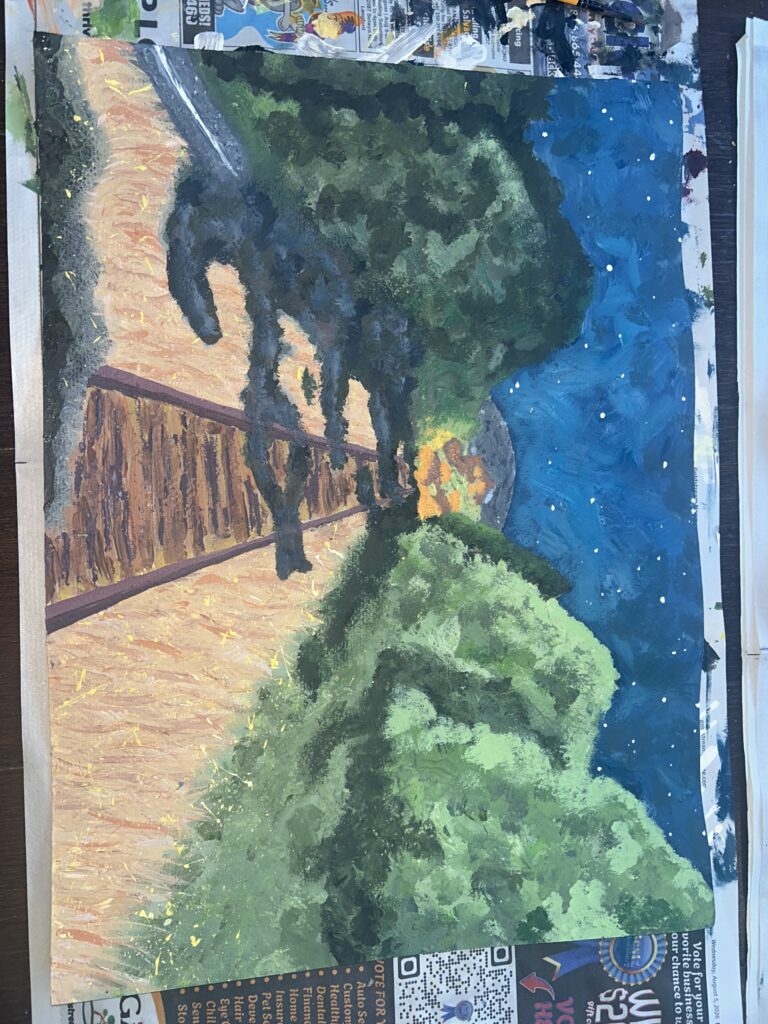
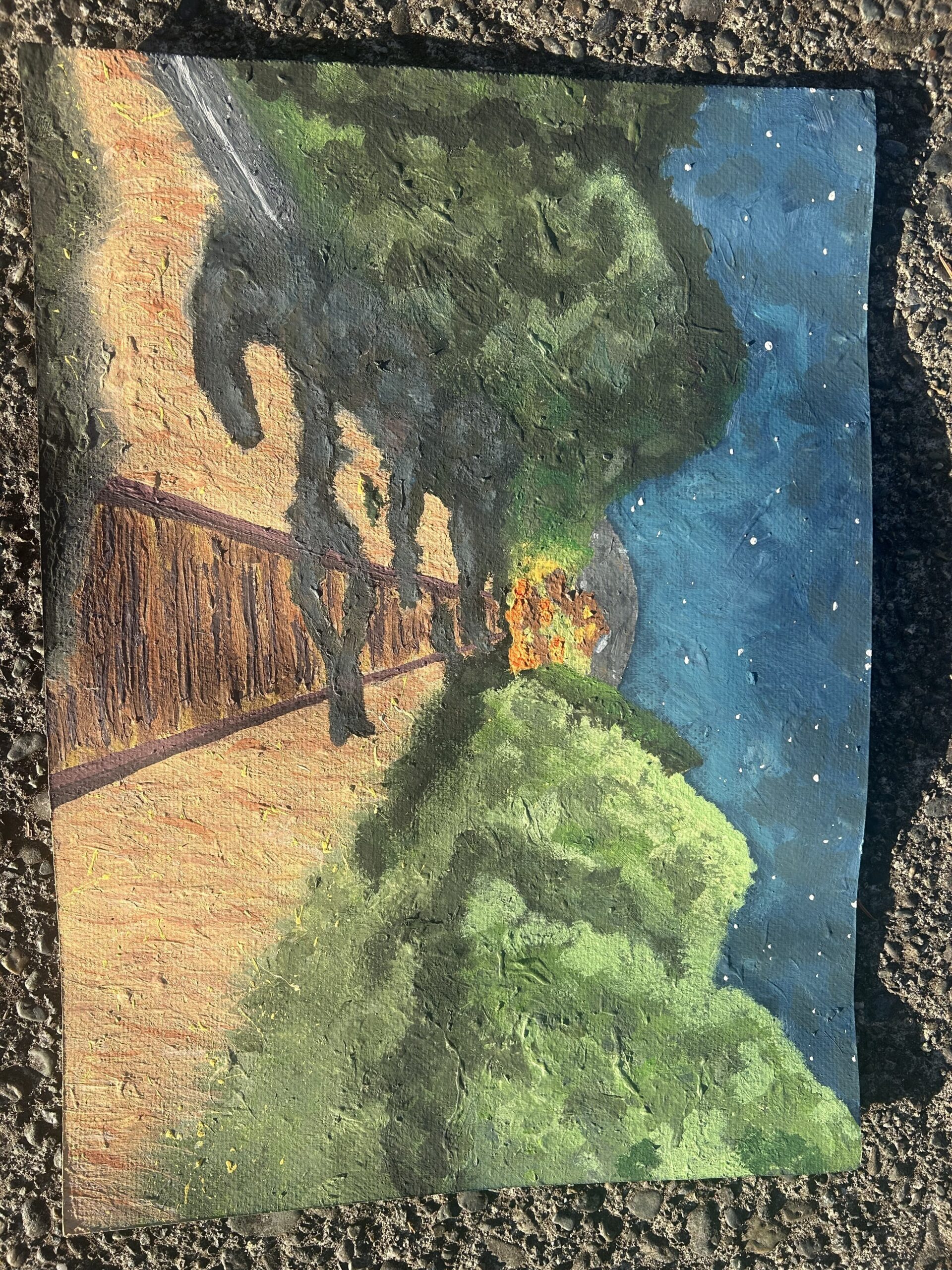
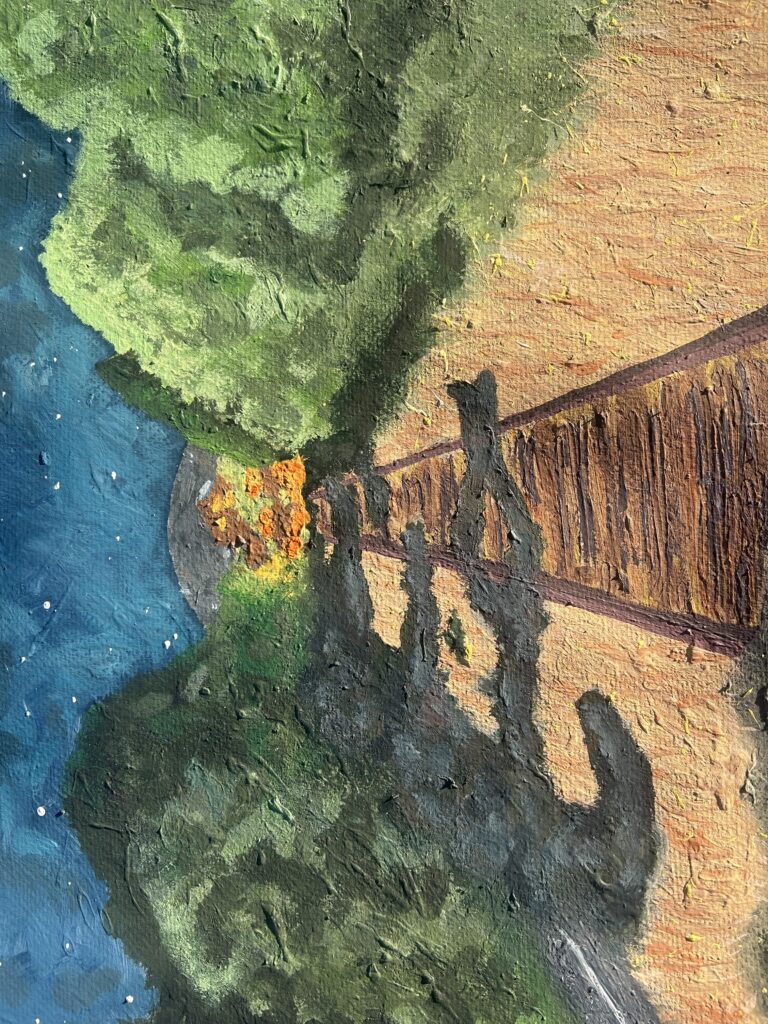
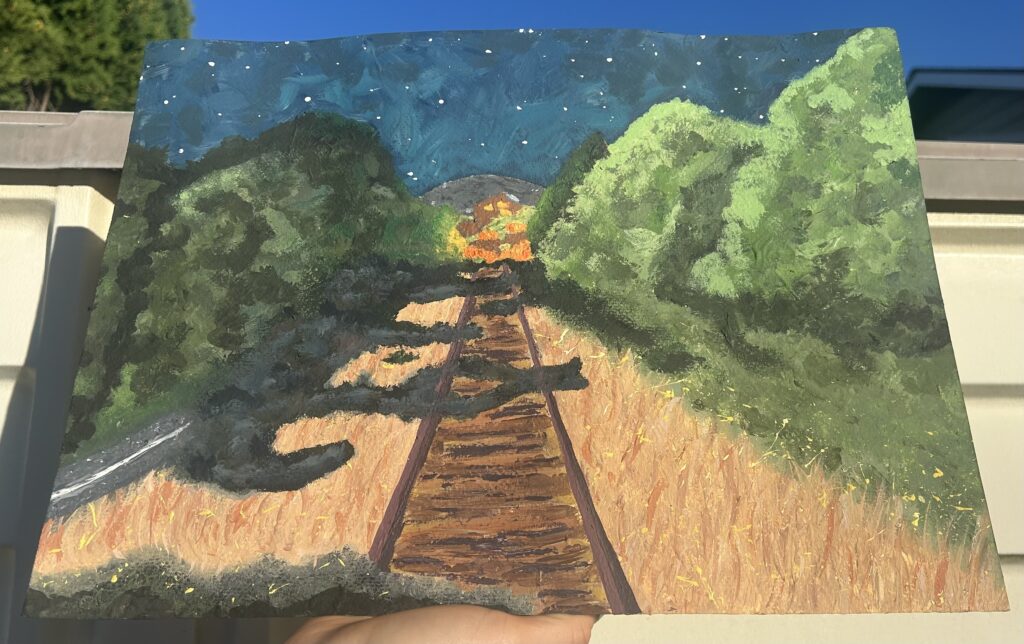
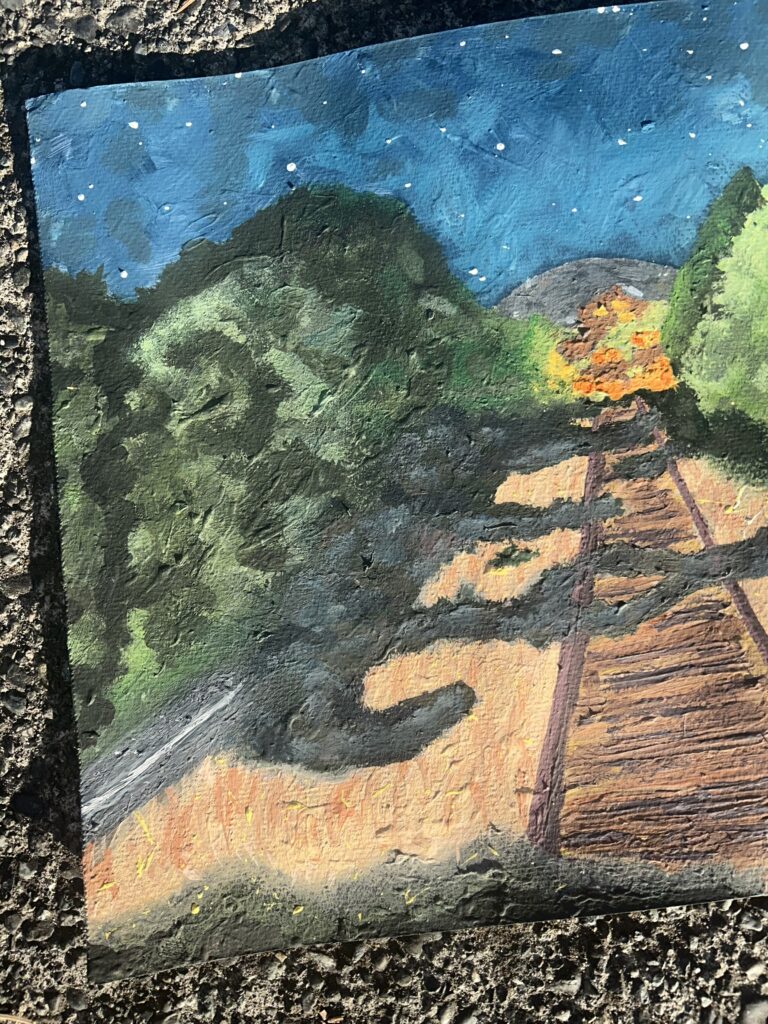
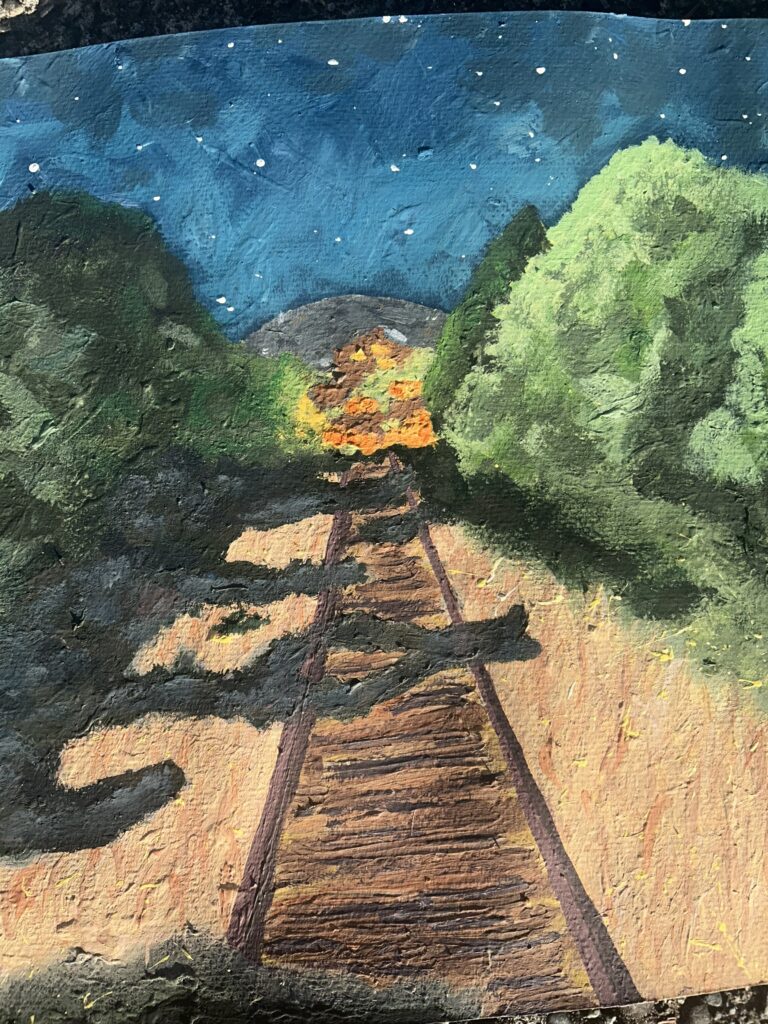
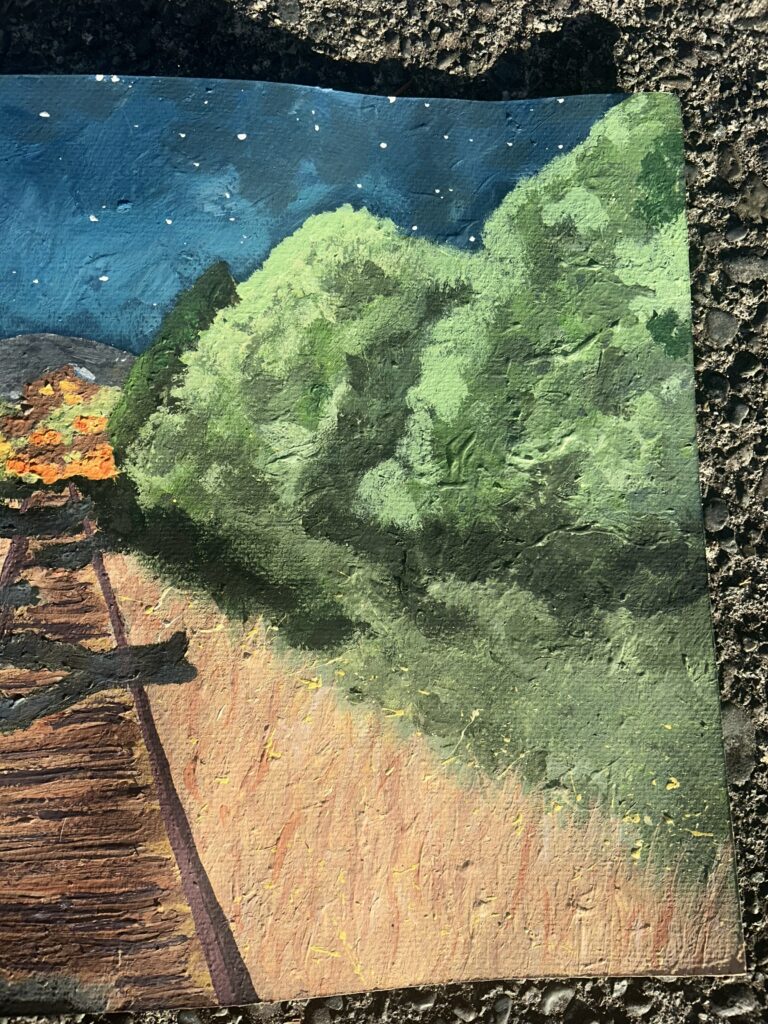
The theme I selected for this painting was space and place. Initially I had envisioned a campfire in the woods up island, a place I know from camping trips and cold winters. However when I took a step back from this idea and really thought deeper into the concept of place and what I wanted to recreate I envisioned my home, a place and neighbourhood I have built bonds in, a railway track that I connect to memories of walking to school in Canada for the first time. A railway that has transformed since I knew it then into a constructed trail and abandoned rail. Representing transitions, change, growth and time moving at an unfathomable rate. I wanted to showcase the deep and even scary feelings that come from this shift of time and all that change brings. I revisited these tracks to feel anything and everything that was encompassed here. It was dark and I felt everything I had imagined and more especially brought on by these creeping shadows that lurked around the tracks. With this vision and stylistic inspirations from the linear / one point perspectives looked at in this weeks slides including, Arcade, Plazzo Spada, Rome c.1635-50 by Francesco Borroenini and The First Days of Spring.1932 by Salvador Dali. I saw the possibilities this angle could bring to a setting and in adding emphasis to a focal point. I found myself still connecting to a lot of Vincent Van Gogh’s work like, The Night Cafe from 1888 as he uses thick brushstrokes and smaller brushes to bring depth, contrast and mood to the environment he is depicting adding to its overall feeling. I was also inspired by Wangechi Mutu and her work showcased in the video, Inside My Studio: Wangechi Mutu by Anderson Ranch Arts Center as she approaches her work in a really interesting way acknowledging ways she may be feeling or thinking during her work and how this actually impacts it but looks at this as a way to “work out tensions [and acts as a form of] personal therapy”. I wanted to practice being really in the moment during the painting process and letting feelings guide where the painting went. Ranch also incorporates a lot of subtle splatter and blending of similar hues which I wanted to practice in my work to add emphasis and depth in detail. With these stylistic approaches in mind I aimed to portray the ambient dark lighting with a vast value range sharing the dark, mysterious and feeling of missing a place in what it once was and watching that version slip away into the darkness. However, at the same time bringing to life this strong focal point of light, nostalgia and hope that its not all gone as these places hold so much depth and meaning in their bones and transformation. I used small brushes and thick strokes to layer colours of light making this point more glowy and allowing the viewer a sense of wonder towards what’s at the end of the tracks beyond the shadow and darkness. The range of value in blacks, greys, greens and beige bring more life, movement and texture to the surroundings of the tracks. This helps bring the viewer from the initial focal point to the tracks, shadow and larger environment. You can also see the new imperfect cement trail in the corner showcasing the development of place, a different, newer path but it’s engulfed in darkness from the shadows. To me this brings a feeling of discomfort and guides some perspective to choosing to follow or look at original, old ways over this newer path and the mysteries it leads to. Smooth lines helped make the painting’s features and edges feel more dream-like and the sharper precise track lines aim to directly take the viewer from the focal point down the track to where the perspective stands in this place of recollection. In Rick Leong’s work I also noticed his background values fading from light to dark bringing to the viewer that realistic sense of light pollution also feeding into that focal point, this is something I attempted blending out choppier light to dark brushstrokes in the sky. I really like the mixture of style, brush size, and value; I think this brings a more thought provoking sense to the painting and the story that each feature holds. The splatter in the grass shows the lively flowers growing in and around the dry grass and value in the tracks, the old rigid wood. Dry brush strokes helped bring more texture here and gray or dark green fading out to the outsides of the shadows. The scale of the painting being further away and allowing space for the tracks to lead out made sense in contrast to its surroundings and holding an effective linear perspective. In terms of challenges encountered, there was a lot of stylistic doubt and general challenge in feeling confident in sections especially the tracks and focal point. To work to resolve this there was a lot of stepping back, coming back to it, getting others opinions especially on where their eye was drawn first and repainting or layering to get a finished look that felt the most impactful to the feelings I was trying to build on. I also took time to analyze the works I mentioned and how these artists used specific brush strokes, and characteristic or stylistic approaches that helped in bringing to life depth, light, shadow and overall feeling so that I could practice these approaches and fix anything I didn’t like. I took this approach for example after redoing my focal point a few times and following Van Gogh’s layered small thick brush strokes to bring this far, less distinct view point enhanced character and light effects. I also encountered some challenges in figuring out where to place different values in the foliage sides to show the layers of tree and bush but found adding more, squinting when looking at my reference photo and highlighting edges with light or shadow really helped achieve what I was looking for after some trial and error. A lot of trying and retrying helped further my understanding of how these values and placements shaped the depth especially in a natural environment in natural darkness. Honestly, painting a natural landscape was a challenge in itself as it’s not an approach or perspective I am used to but thinking in terms of feelings, other artists styles, and a mix of realism and abstraction furthered my ability in trying something hard especially in the sense of learning so many new skills and applying what I had learned from the previous projects here. My views towards painting have changed in my willingness to try new styles and perspectives. I am much more influenced or inclined to zoom in and out of an object or setting I want to paint to explore its features, texture and colour in a more abstract way. I feel that my willingness to try different styles and techniques has opened up and allowed me to build a more personal connection and joy to painting but also the possibilities within painting especially in relation to sharing feelings and colour mixing range. Painting feels more freeing and community based as during the painting process I had a lot of input from others to help build on these and engaging with others’ work or recommendations within discussion galleries helped me build confidence and continually build on learning new techniques. This also inspires the approaches in which I would like to teach art and painting as an educator in a more free flowing and community centred way. I have much better colour sense and mixing abilities to find new hues, complementary colours, and monochromatic shades. I definitely feel that I have grown overall in my painting abilities over the past weeks. I have learned from a range of artists, example videos, from testing new styles and techniques and a lot from approaches to values, shading and shadow work through each project thus far. I still have a lot to practice and grow within my abilities and specific techniques which will be my next step especially in continuing to grow my confidence in teaching these to others.
Preparatory Sketches
Colour Study
Development Photos
Final Painting
Reference / Visual Research & Inspiration