This week I will be looking into Cari Wilson, the VP of Innovation & Technology for West Vancouver Schools. She shares strong conceptual knowledge and input on AI especially through her presentation on some crucial topics around its use that I will be delving into to expand on my own developing knowledge on AI’s tools, use, precautions, and considerations.
How can we use AI in a meaningful, effective and supplemental way?
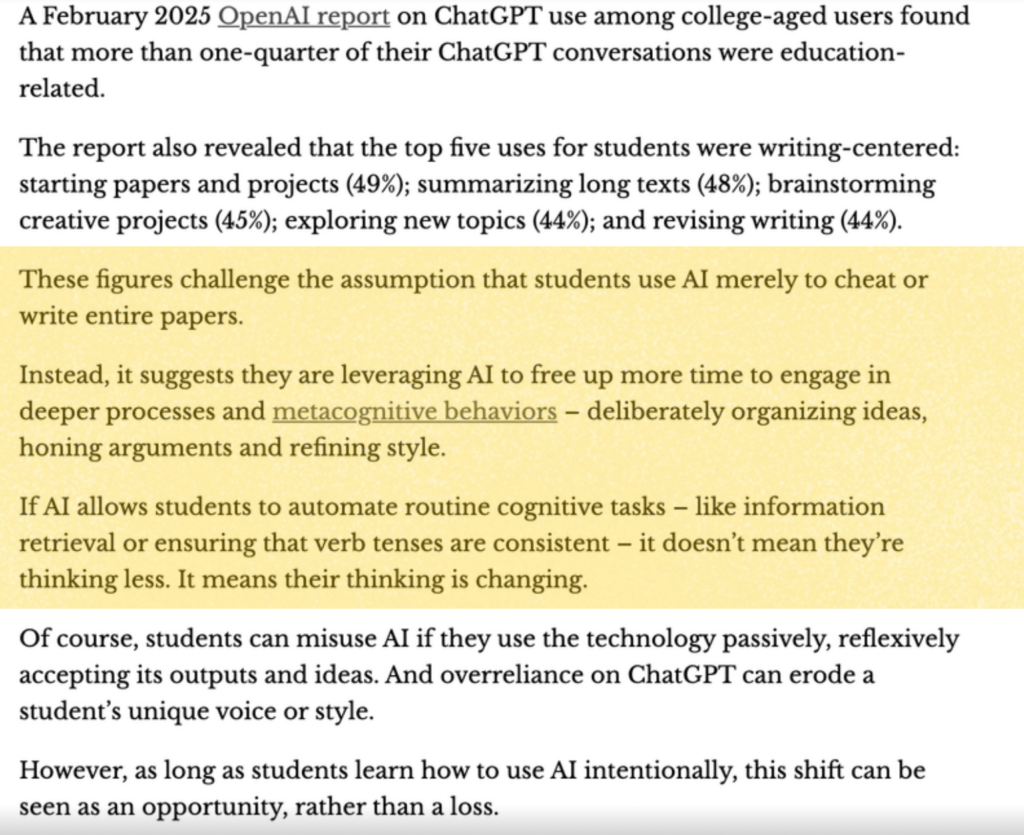
My peers studying education have varying thoughts and feelings around the use of AI in the classroom and many would agree with this assumption that AI is used in education only as a cheat or “way out” of work. However, I believe that AI has the potential to be used as a supplemental tool towards academic growth and confidence. Many learners find great success in using AI tutors for example, to structure, organize, guide, and scaffold learning which could even lead to strengthening progression awareness or suitable assessment practices. The success of integrating AI into the classroom and education is also seen through developing school systems built with an AI academic foundation like the U.S. based institution, Alpha School. With this in mind I think educators should stay interested and educated around AI use and diverse programs available as these are actively developing and can be integrated into a classroom in such a diverse way whether supporting diverse learners needs, generating prompts, lesson ideas, or providing students writing starters. For educators curious about education specific AI with more specific guidelines and considerations built within you may be interested in reading my inquiry blog breaking a variety of these programs down and suggesting different uses based on their strengths. Considering integrating these would also foster students’ understanding, ethical and effective use in their future or outside of the classroom lives as well motivating further learning around a critical, constantly developing topic of our generation.
The Role of AI in Personalized Learning, Lesson Planning & Teaching Inquiry Blogs
Considering The Past and Future of AI
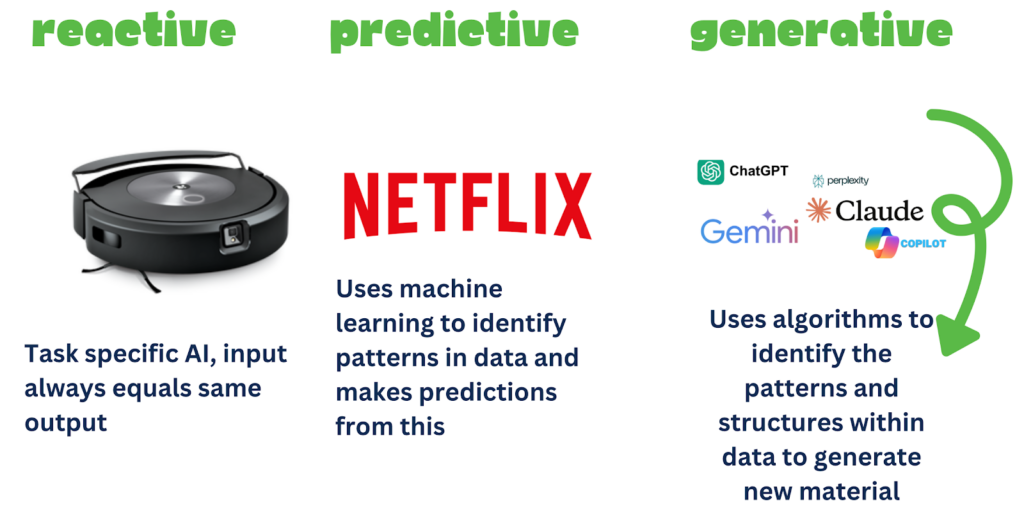
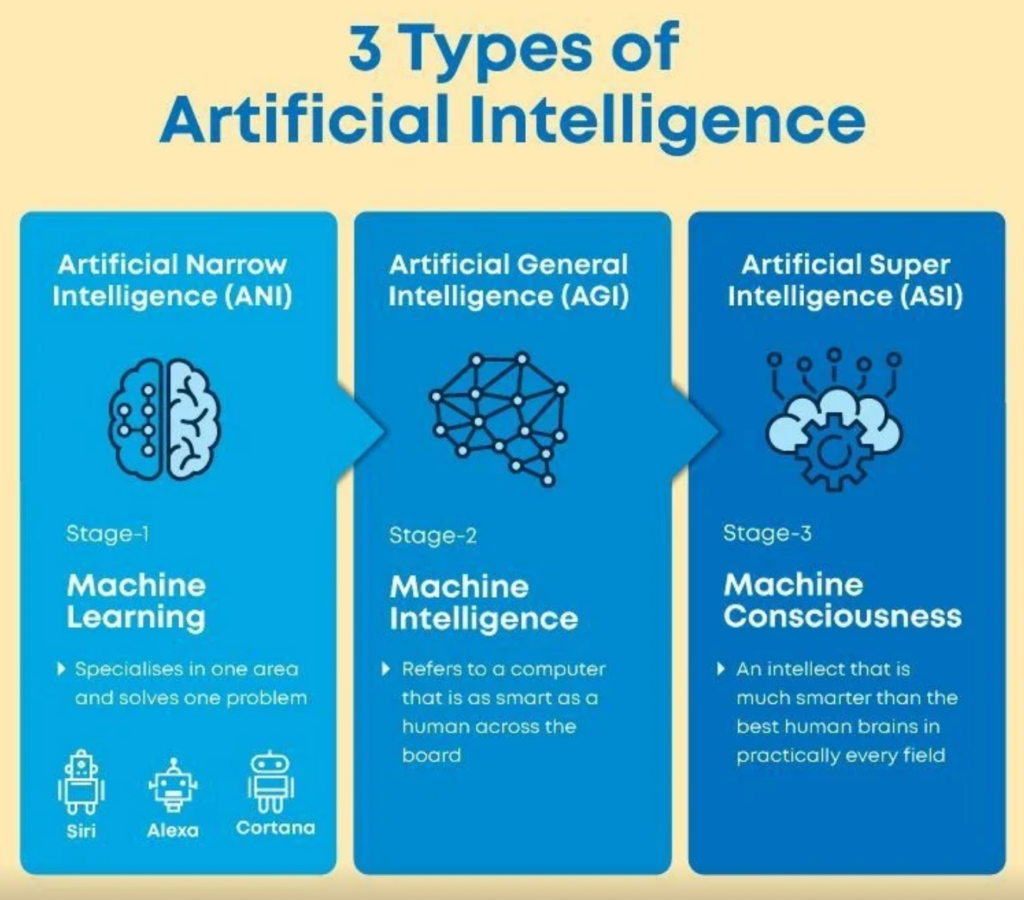
Wilson’s Presentation also hones into the history of AI’s development & resources including Siri, deepfakes, the Sophie robot for example. When we break these developments and their uses down we can think about the three main approaches AI runs on revealed in the presentation as being reactive, predictive and generative as shown below but also the level of intelligence generating the output within a specific program.
AI Programs Goals & Development
Considering AI’s past development and common goals these resources or developers strive to achieve is another core piece in uncovering effective use in education but also in understanding our role as individuals to be actively aware of both positives and negatives around its use / growth. The following are the 3 goals and concerns that I have seen solidified through related research. These ideas support further research, teaching, precautions, and positive updates within AI functions to build on “proper” more ethical use moving forward.
- AI becoming more personable (human centered) reactive
- AI processing a wider range of online information and pulling from the most “meaningful,” “relevant” or “human” resources for data.
- AI increasing or controlling economic growth (by running businesses and generating income) – creating new forms of software.